Choosing the right PEG functional group for bioconjugation starts with understanding the reactive groups on the molecule you want to modify. NHS ester PEG is commonly used to react with primary amines, maleimide PEG is widely used for thiol conjugation, and azide or DBCO PEG derivatives support bioorthogonal click chemistry. The correct choice depends on the target molecule, reaction conditions, required selectivity, and intended application.
For researchers working with proteins, peptides, antibodies, oligonucleotides, or drug-linker systems, PEG is more than a hydrophilic spacer. Its terminal functional groups determine how the polymer can be attached to another molecule. SINOPEG offers a range of functionalized PEG derivatives for bioconjugation, polymer modification, and biomedical research.
A practical selection process should answer three questions: Which functional group is available on the target molecule? Which reaction is compatible with the molecule and its environment? And does the final conjugate require a defined structure, a particular linker length, or site-selective modification?
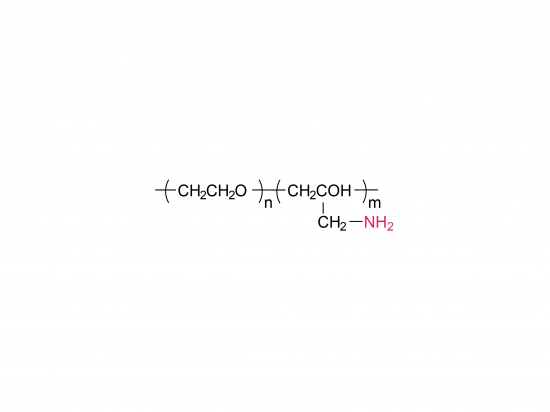
Example of an amine-functionalized PEG derivative for molecular modification.
What Is a Functional Group in PEG Bioconjugation?
A functional group is a specific chemical group that determines how a molecule participates in a reaction. In functionalized PEG, one or both ends of the PEG chain carry groups selected for coupling, conjugation, crosslinking, or further chemical modification.
For example, an amino-PEG derivative contains an amine group, while a maleimide-PEG derivative contains a maleimide group that can react with suitable thiol partners. A heterobifunctional PEG linker carries two different functional groups, allowing the two ends to participate in different reactions.
The choice of functional group affects reaction compatibility and selectivity. However, the presence of a suitable group alone does not guarantee site-specific conjugation. The accessibility of the target group, competing reactive sites, linker architecture, and reaction conditions also matter.
Researchers can start by reviewing SINOPEG's amine-functionalized PEG products when a project requires an amino group for coupling or further derivatization.
How to Match PEG Functional Groups With the Target Molecule
The most useful starting point is the chemistry of the target molecule rather than the name of the PEG product. Identify which reactive groups are available, whether they are accessible, and whether they can tolerate the planned reaction conditions.
| PEG functional group | Typical reaction partner | Common use |
|---|---|---|
| NHS ester | Primary amines | Protein, peptide, and surface conjugation |
| Amine (NH2) | Activated carboxyl groups, including NHS esters | Linker construction and amide coupling |
| Maleimide (MAL) | Suitable free thiols | Cysteine-containing peptides and protein conjugates |
| Thiol (SH) | Maleimide and other thiol-compatible partners | Crosslinking and conjugate assembly |
| Carboxyl (COOH) | Amines following suitable activation | Amide bond formation and linker synthesis |
| Azide (N3) | Alkyne or strained alkyne such as DBCO | Click chemistry and modular conjugation |
| DBCO | Azide | Copper-free click chemistry |
This comparison is a starting guide, not a universal reaction protocol. The correct pairing depends on the exact structures and reaction environment. For example, an NHS ester can hydrolyze in aqueous solution, while thiol-maleimide coupling requires appropriate control of thiol availability and reaction conditions.
When Should You Choose NHS Ester PEG?
NHS ester PEG is commonly selected when the target molecule contains accessible primary amines, such as lysine side chains or an N-terminal amino group on a peptide or protein. Under suitable conditions, the NHS ester reacts with an amine to form an amide bond.
This chemistry is useful for protein modification, peptide conjugation, surface functionalization, and the preparation of certain drug-linker intermediates. It is often convenient when the target already contains suitable amines and introducing a different reactive handle is unnecessary.
However, many proteins contain multiple accessible lysine residues. NHS ester modification may therefore produce a mixture of conjugation sites or degrees of labeling unless the reaction is carefully designed. NHS ester hydrolysis also competes with the desired reaction, so pH, buffer composition, reagent preparation, and reaction time need to be considered.
If the project requires an amine-reactive linker for conjugation, researchers can review SINOPEG's NHS-functionalized PEG product range and compare the available structures with their target molecule.
When Is Maleimide PEG Suitable for Thiol Conjugation?
Maleimide PEG is commonly used to modify molecules containing suitable free thiol groups, including cysteine residues in peptides and proteins. The maleimide group can react with a thiol to form a covalent linkage under compatible conditions.
This approach is particularly useful when a project has an accessible cysteine or a deliberately introduced thiol handle. Compared with broadly targeting multiple lysine residues, thiol-directed conjugation can offer better control over modification location when the target has a suitably defined set of reactive thiols.
There are still important considerations. Free thiols can oxidize, other thiols in the reaction mixture can compete, and maleimide-derived linkages may undergo exchange or other stability-related changes depending on their structure and environment. Reaction conditions and downstream stability should therefore be evaluated for the specific conjugate.
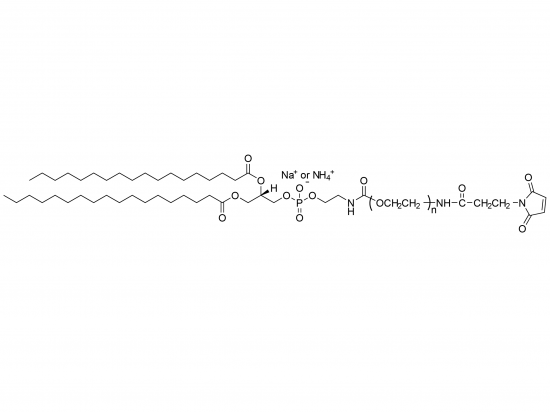
Example of a maleimide-functionalized PEG-lipid structure.
For projects involving maleimide chemistry, SINOPEG provides maleimide-functionalized PEG derivatives in different molecular architectures. Select the actual product according to the required PEG chain, the second functional group if present, and the intended conjugation strategy.
How Do Carboxyl and Amine PEG Differ?
Carboxyl-functionalized PEG and amine-functionalized PEG are useful building blocks for amide bond formation, but their roles in a coupling reaction are different.
A carboxyl group generally needs to be activated before it can couple efficiently with an amine under common amide-forming conditions. Reagents such as EDC, often combined with NHS, can facilitate this process. By contrast, an NHS ester is already an activated carboxyl derivative designed to react with suitable nucleophiles, especially primary amines.
Amine-functionalized PEG can serve as the amine-bearing partner when the other molecule has an activated carboxyl group. The best arrangement depends on which component is easier to activate, which groups must remain available, and whether the synthesis requires sequential coupling.
Researchers can compare SINOPEG's carboxyl-functionalized PEG products with amine-functionalized derivatives to identify a suitable starting material for their synthesis route.
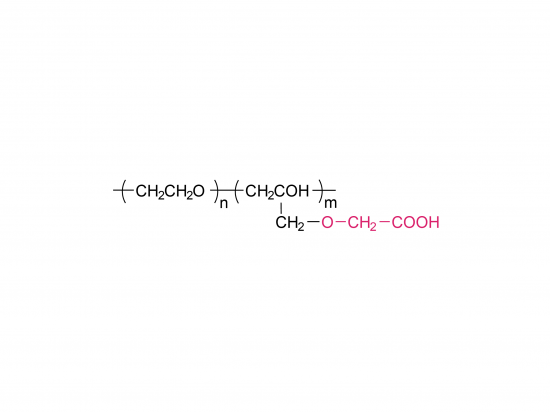
Example of a carboxyl-functionalized PEG derivative.
When Should You Use Azide, Alkyne, or DBCO PEG?
Azide, alkyne, and DBCO functional groups are widely used in click chemistry, where compatible reactive partners can be joined through a selective chemical reaction. These groups are useful when researchers want to assemble complex molecules in a modular way or introduce a defined chemical handle for a later conjugation step.
Azide and terminal alkyne groups can participate in copper-catalyzed azide-alkyne cycloaddition (CuAAC). When copper is unsuitable because of the biological system, downstream application, or purification requirements, azide can also react with a strained alkyne such as DBCO through strain-promoted azide-alkyne cycloaddition (SPAAC).
These approaches can be useful in peptide modification, biomolecule labeling, polymer functionalization, and the preparation of drug-linker systems. Nevertheless, the choice between copper-catalyzed and copper-free chemistry should account for reaction efficiency, steric accessibility, reagent solubility, and the compatibility of the final product with downstream use.
For applications that require azide-containing PEG building blocks, SINOPEG offers an azide-functionalized PEG product range. The specific chain length and molecular structure should be matched to the planned click reaction.
How to Choose a Heterobifunctional PEG Linker
A heterobifunctional PEG linker contains two different functional groups, enabling two distinct coupling steps. This design is useful when two different molecules need to be connected or when one end of the PEG must attach to a target while the other remains available for subsequent modification.
For example, an NHS-PEG-maleimide linker can be designed to connect an amine-bearing molecule and a thiol-bearing molecule. In a typical strategy, the NHS ester reacts with an accessible amine first, excess reagent is removed where needed, and the maleimide end is then used for thiol conjugation. The actual sequence depends on the structures, reaction conditions, and stability of the reactive groups.
Before selecting a heterobifunctional linker, check both ends of the molecule. The first reaction should not consume or damage the second reactive group, and the intermediate should remain stable enough for purification and the next coupling step.
When defined linker architecture is important, SINOPEG's heterobifunctional monodisperse PEG linkers provide a relevant product category to review for research and development applications.
What Else Should You Consider Before Selecting a PEG Reagent?
Matching functional groups is essential, but it is not the only factor that determines whether a PEG reagent is appropriate for bioconjugation. Researchers should also evaluate the following points before ordering or beginning an experiment.
- Target accessibility: Confirm that the reactive group is accessible and available in the target molecule under the intended reaction conditions.
- PEG molecular weight and chain length: Select a suitable spacer length based on the required molecular distance, solubility, flexibility, and steric environment.
- Linker architecture: Decide whether a monofunctional, homobifunctional, heterobifunctional, or multi-arm structure is appropriate.
- Reaction selectivity: Consider competing functional groups, possible side reactions, and whether modification needs to occur at a specific site.
- Stability and purification: Evaluate reactive group hydrolysis, thiol oxidation, intermediate stability, and the practical requirements for removing unreacted material.
- Product documentation: Check chemical identity, molecular weight, purity, available analytical data, storage conditions, and the product's stated specifications.
If the required functional group combination or chain length is not available in the standard catalog, custom synthesis may be worth discussing with the supplier. The final selection should be based on the actual molecular structure and project requirements rather than the functional group name alone.
Frequently Asked Questions
How do I choose the right PEG functional group for bioconjugation?
Start by identifying the accessible reactive groups on the target molecule. NHS ester PEG commonly reacts with primary amines, maleimide PEG reacts with suitable free thiols, and azide or DBCO PEG can support click chemistry. Then consider reaction conditions, site selectivity, linker length, and final product stability.
What is the difference between NHS PEG and maleimide PEG?
NHS ester PEG is commonly used for amine conjugation, while maleimide PEG is commonly used for thiol conjugation. Their reaction partners, suitable conditions, and potential side reactions differ, so they are not interchangeable without considering the target chemistry.
Is amine-functionalized PEG suitable for protein conjugation?
Amine-functionalized PEG can be used when the other coupling partner contains a suitably activated carboxyl group or another compatible reactive group. If the protein itself contains accessible amines and the PEG is intended to react directly with them, an appropriate amine-reactive PEG derivative may be more suitable.
When should I choose azide PEG or DBCO PEG?
Azide PEG and DBCO PEG are often used as complementary partners in copper-free click chemistry. The appropriate choice depends on which reactive handle is already present on the target, the planned reaction sequence, and the compatibility of the molecules with the reaction conditions.
What is a heterobifunctional PEG linker?
A heterobifunctional PEG linker carries two different functional groups. Each end can participate in a different coupling reaction, allowing researchers to connect two molecular components through a defined PEG spacer.
Does choosing the correct PEG functional group guarantee successful conjugation?
No. Functional group compatibility is only one factor. Target accessibility, reaction conditions, reagent stability, competing reactions, purification, and analytical confirmation all affect the outcome of a bioconjugation process.
References
The following scientific reviews provide background on bioconjugation reactions, reactive group selection, and the practical limitations of common coupling chemistries.
- Hermanson, G. T. Bioconjugate Techniques. Third Edition. Academic Press, 2013. A general reference for bioconjugation methods and reaction design.
- Hoyle, C. E., and Bowman, C. N. Thiol–Ene Click Chemistry. Angewandte Chemie International Edition. 2010;49:1540–1573.
- Stephanopoulos, N., and Francis, M. B. Choosing an Effective Protein Bioconjugation Strategy. Nature Chemical Biology. 2011;7:876–884.
- Practical Considerations, Challenges, and Limitations of Bioconjugation via Azide-Alkyne Cycloaddition. Bioconjugate Chemistry. Available through PubMed Central.
- Kolb, H. C., Finn, M. G., and Sharpless, K. B. Click Chemistry: Diverse Chemical Function from a Few Good Reactions. Angewandte Chemie International Edition. 2001;40:2004–2021.
The information in this article is intended for scientific and technical reference. Actual reagent selection and reaction conditions should be validated for the specific molecules, analytical requirements, and intended research application.